
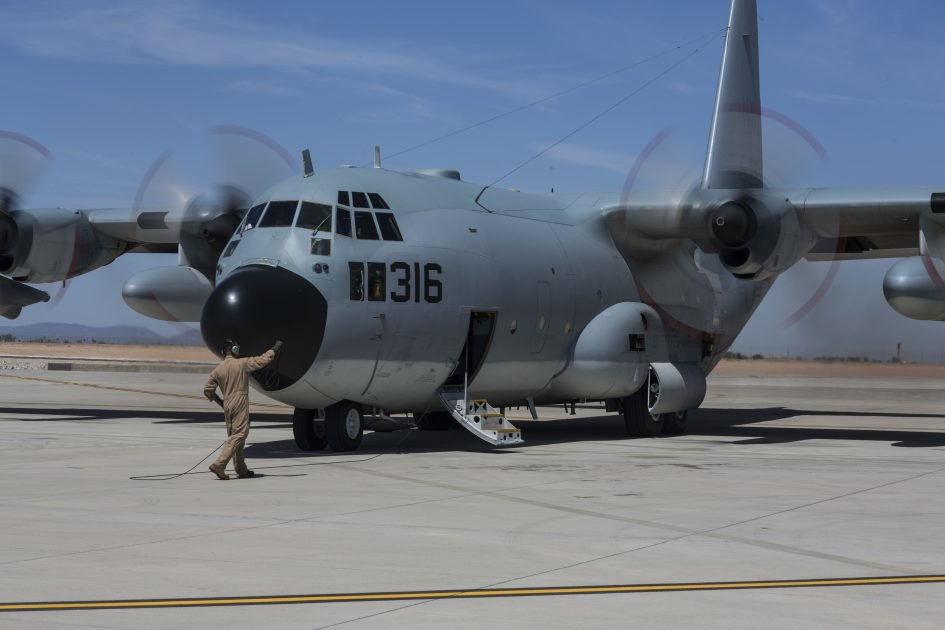
 On July 10, 2017, a crew from reserve unit Marine Aerial Refueler Transport Squadron 452 (VMGR-452) departed their home station at Stewart Air National Guard Base in New York and flew to Marine Corps Air Station Cherry Point, N.C. Their mission for the day was to transport six Marines and a Navy corpsman assigned to 2nd Marine Raider Battalion from North Carolina to Naval Air Facility El Centro, Calif., where the special operations unit was set to conduct pre-deployment training.
/arc-anglerfish-arc2-prod-mco.s3.amazonaws.com/public/UJNGLXI66NEIRGY63D6WUOWDK4.jpg)
/arc-anglerfish-arc2-prod-mco.s3.amazonaws.com/public/WYIN5IKAOBGRDMBJ3BK2SSOR4Q.jpg)
/arc-anglerfish-arc2-prod-mco.s3.amazonaws.com/public/HHS2CELVPZBCBHQ354URVBU3BU.jpg)


casey
-
Posts
148 -
Joined
-
Last visited
-
Days Won
6
Content Type
Profiles
Forums
Store
Gallery
Downloads
Calendar
C-130 Hercules News
Posts posted by casey
-
-
Please do not post any Export Control data on this site.
WARNING -This document contains technical data whose export is restricted by the Arms Export Control Act (Title 22, U.S.C., Sec. 2751 et seq.) or the Export Administration Act of 1979 (Title 50, U.S.C., App. 2401 et seq.), as amended. Violations of these export laws are subject to severe criminal penalties. Disseminate in accordance with provisions of DoD Directive 5230.25.
-
On 12/21/2018 at 10:09 AM, DC10FE said:
OK, In my opinion, you've both beat up this subject enough. Just let it go; it's getting pretty old now.
Merry Christmas,
Don R.
Agreed.
-

The Marine Corps determined that a corroded propeller blade that came off mid-flight was the cause of the July 10, 2017, crash of a KC-130T transport plane.
That propeller did not go through proper maintenance the last time it was sent to an Air Force repair depot, which may have led to the damaged propeller remaining on the airplane that ultimately crashed and killed all 16 personnel onboard.
The Marine Corps released a partially redacted Judge Advocate General Manual Investigation today, which found that “the investigation found the primary cause of this mishap to be an in-flight departure of a propeller blade into the aircraft’s fuselage. … The investigation determined that the aircraft’s propeller did not receive proper depot-level maintenance during its last overhaul in in September 2011, which missed corrosion that may have contributed to the propeller blade liberating in-flight,” according to a Marine Corps press release on the investigation.
Marine Forces Reserve conducted the investigation and has made several recommendations for Naval Air Forces and for the Air Force to consider for their C-130 fleets.
The Crash
On July 10, 2017, a crew from reserve unit Marine Aerial Refueler Transport Squadron 452 (VMGR-452) departed their home station at Stewart Air National Guard Base in New York and flew to Marine Corps Air Station Cherry Point, N.C. Their mission for the day was to transport six Marines and a Navy corpsman assigned to 2nd Marine Raider Battalion from North Carolina to Naval Air Facility El Centro, Calif., where the special operations unit was set to conduct pre-deployment training.
The aircraft departed Cherry Point at 2:07 p.m. Its last transmission to local air traffic control was at 3:46 p.m., and the last radar contact with the plane was at 3:49, when the plane was flying at 20,000 feet altitude, according to the JAGMAN.
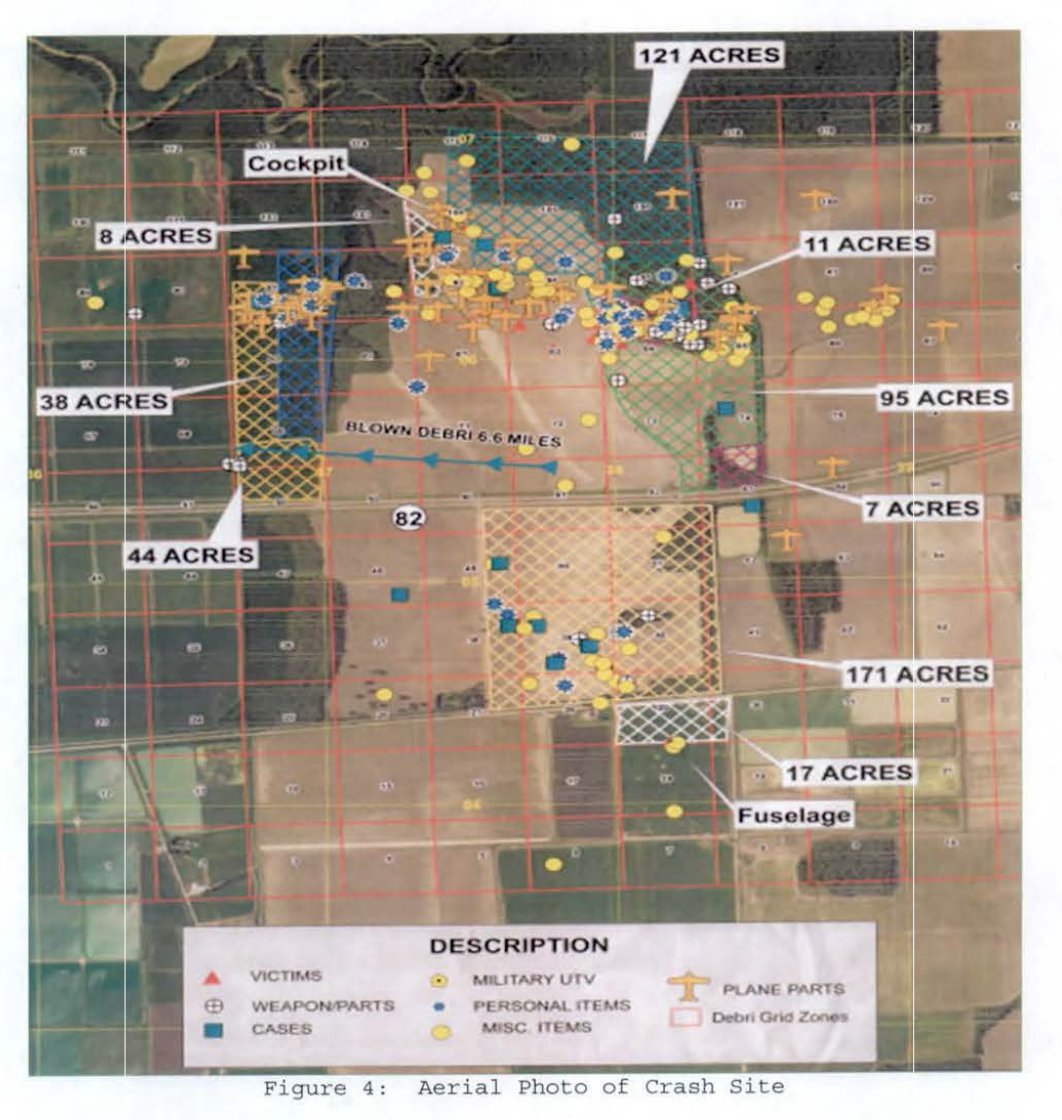
The Marine Corps investigation found that Blade 4 on Propeller 2 (P2B4, in the report) became unattached, struck the port side of the fuselage, cut straight through the interior of the passenger area of the plane and became lodged in the interior of the starboard side of the plane. This damage kicked off a series of events that led to Propeller 3 colliding with the starboard side of the fuselage and ultimately the plane breaking into three pieces mid-air.
The cockpit and the rear of the fuselage crashed into two separate debris fields in a soybean field near Itta Bena, Miss. The middle section of the plane, where the passengers were located, further broke up in the air.
Marine Corps leadership made clear there was nothing the crew or passengers could have done to prevent the mishap or save themselves once the propeller blade broke loose.
Brig. Gen. Bradley James, commanding general of 4th Marine Aircraft Wing, which oversees the reserve KC-130T squadron, wrote in the investigation report that “the initial incident that started the cascading failure was the liberation of a blade from the #2 propeller assembly. The subsequent events quickly led to structural failure of the aircraft. Neither the aircrew nor anybody aboard the KC-130T could have prevented or altered the ultimate outcome after such a failure.”
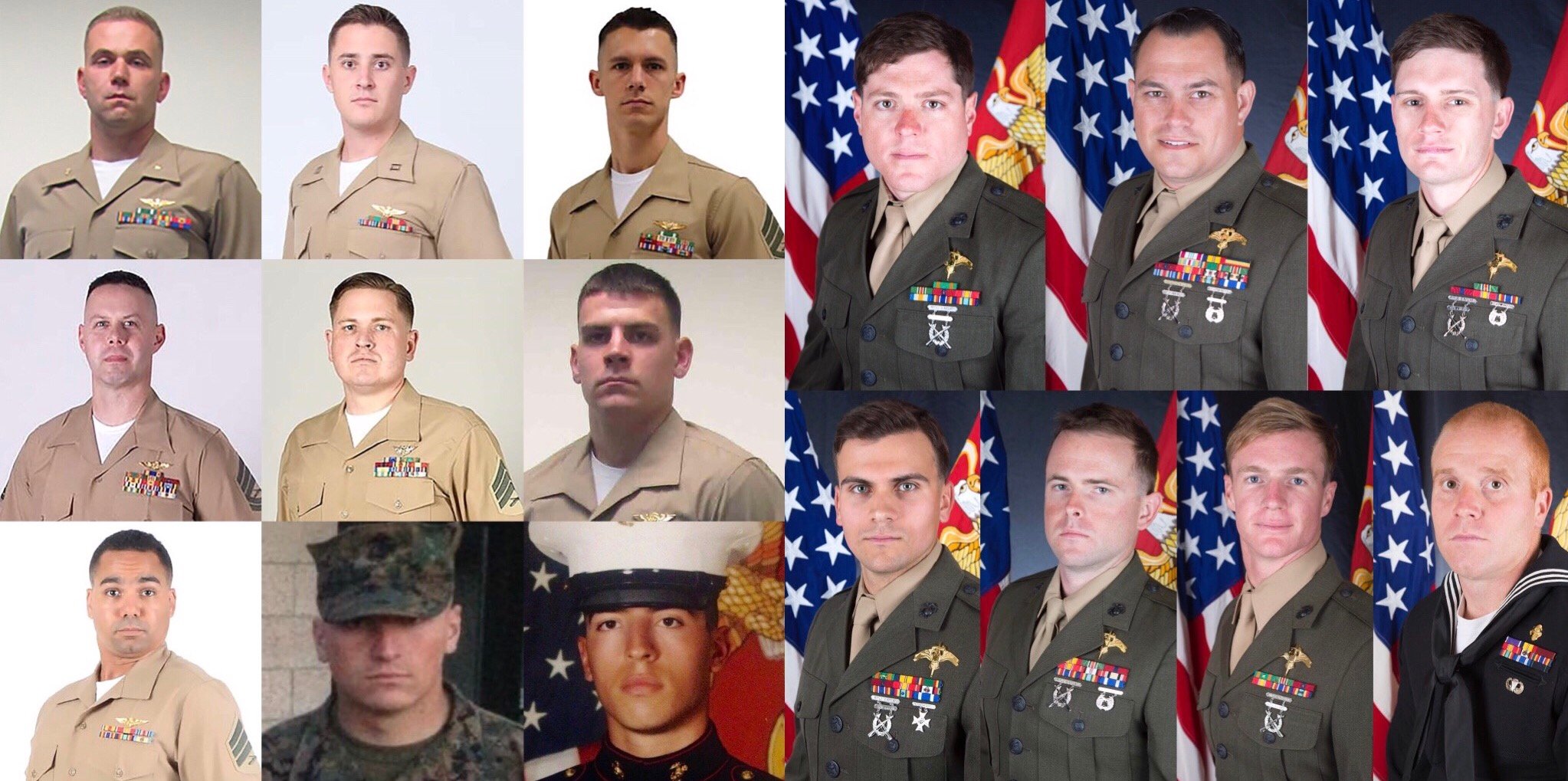
Pictures of the Marines and sailor who died in a KC-130T cargo aircraft on July 10, 2017. USMC Photos
Killed in the crash were: Maj. Caine Goyette, an active duty Marine who was flying the plane the day of the crash, who the report found was current on all his certifications and had 2,614 hours of flight time in military aircraft; Capt. Sean Elliott, an active duty Marine who co-piloted the plane and had 822 hours of military aircraft flight experience; Gunnery Sgt. Mark Hopkins, Gunnery Sgt. Brendan Johnson, Staff Sgt. Joshua Snowden, Sgt. Owen Lennon, Sgt. Julian Kevianne, Cpl. Collin Schaaff and Cpl. Daniel Baldassare, who were part of the VMGR-452 crew; and Staff Sgt. Robert Cox, Staff Sgt. William Kundrat, Sgt. Chad Jenson, Sgt. Talon Leach, Sgt. Joseph Murray, Sgt. Dietrich Schmieman and Petty Officer 2nd Class Ryan Lohrey, who were assigned to 2nd Marine Raider Battalion.
Maintenance Failures
Though no one on the plane could have stopped the events that unfolded, the maintenance community could have prevented them. The investigation found a failure to inspect the propeller during its last depot maintenance period, as well as missed opportunities during squadron-level maintenance to potentially notice the corroded blade.
The plane itself was 24 years old and was last in depot maintenance at Warner-Robbins Air Logistics Complex (WR-ALC) in Georgia in August 2011 for blade overhauls. The Air Force complex is manned by civilian employees who rework and overhaul propellers and is the sole source of this overhaul work for Navy and Marine Corps C-130s.
According to the JAGMAN, the Navy and Marine Corps require C-130 propellers to undergo an overhaul every 5,000 to 6,000 flight hours. Investigators studying the plane wreckage found not only corrosion in the Blade 4 Propeller 2, but found anodize coating inside the corrosion pitting – which means the corrosion was there during the 2011 overhaul, and instead of removing the corrosion and fixing the blade, the coating was applied over the damaged blade.
“Negligent practices, poor procedural compliance, lack of adherence to publications, an ineffective [quality control/quality assurance] program at the WR-ALC, and insufficient oversight by the [U.S. Navy], resulted in deficient blades being released to the fleet for use on Navy and Marine Corps aircraft from before 2011 up until the recent blade overhaul suspension at WR-ALC occurring on 2 September 2017,” reads the JAGMAN, referring to the September “Redstripe” standdown of all Navy C-130s until further blade inspections could be conducted.
Twelve of the 16 total blades on the plane that crashed – four blades on each of four propellers – “were determined to have corrosion that existed at the time of their last overhaul at WR-ALC, proving that over the course of the number of years referred to above, that WR-ALC failed to detect, remove and repair corrosion infected blades they purported to have overhauled. … Thirteen of the sixteen blades on the [mishap aircraft] had other discrepancies proving that, over the same span of years referred to above, WR-ALC was deficient in the effective application of the following steps: anodization, epoxy primer and permatreat,” the JAGMAN continues.
Though less severe than the failure at the Air Force depot, the report noted concerns with maintenance practices within the squadron earlier in 2017, in the months before the crash.
According to the JAGMAN, the squadron failed to establish a formal process to track and perform the 56-day conditional manual inspections of the propeller blades that can be triggered when the plane is not used or when the blades are not rotated for 56 days. Due to a lack of a clear procedure, on at least two occasions in 2017 a conditional inspection was triggered, but the squadron believed that separate inspections met the requirement and therefore the maintainers did not do the manual blade inspection. However, the investigation notes that it could not be determined whether a manual inspection could have identified the damage to the blade that led to it becoming detached mid-flight and causing the crash.
Recommendations
In August 2017, a Navy engineering team conducted a process audit at Warner-Robbins Air Logistics Complex and found that, even though the Navy and Marine Corps have separate blade overhaul procedures and standards from the Air Force, the civilian workforce had failed to track which blades belonged to which service and therefore which maintenance standards to apply. Only about 5 percent of the blades belong to Navy and Marine Corps planes, but the Navy recommended creating a standard work flow process and the Air Force agreed to adopt all the Navy’s processes.
The report also recommends that Warner-Robbins Air Logistics Complex maintain electronic records of all blade overhauls that can be kept permanently, compared to the paper records that are discarded after two years. It also recommends greater Navy oversight of Navy/Marine Corps overhauls at Warner-Robbins, blade overhauls at a more frequent interval than 5,000 hours, and additional clarity on the 56-day inspections.
View original article: https://news.usni.org/2018/12/06/marine-corps-corroded-propeller-blade-that-broke-loose-caused-2017-kc-130t-crash
-
-
Can anyone confirm the Reg/Lockheed Production number of the incident aircraft?
-
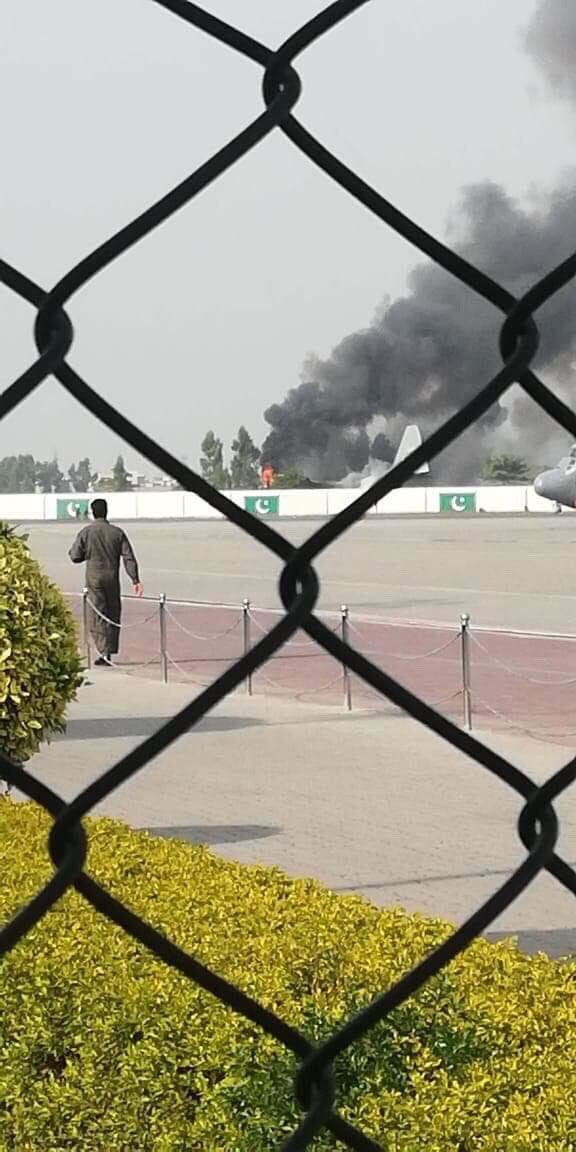
A Pakistan Air Force (PAF) C-130 cargo aircraft crash landed at Nur Khan airbase in Rawalpindi on Friday.
The aircraft caught fire after the hard landing and the pilot and the trainee pilot were reported safe by authorities.
The PAF C-130 was on a routine training flight, said a spokesman for the service and added that the fire was extinguished and all crew members are safe.
A board of inquiry has been ordered by Air Headquarters to ascertain the cause of the incident., added the PAF spokesman.
The C-130, a US manufactured four-engine turboprop military transport aircraft, is the workhorse of the air force’s fixed-wing transport fleet. The tactical transport aircraft was inducted into the PAF in the early 1960s and has remained at the forefront of relief operations during natural calamities.
Apart from transporting all manner of cargo, the aircraft is also used by paratroopers and special operation forces when performing airborne operations.
Earlier in June, two pilots died when a PAF training aircraft crashed while landing at the Peshawar airbase. The plane was returning from a routine operational training mission, when it crashed during landing.
In another accident, a Frontier Corps soldier was martyred and two others were injured when an Army helicopter crash-landed on the outskirts of Quetta. The helicopter was en route from Kohlu to Quetta and carrying an injured soldier.
The soldier was being evacuated in an injured condition, however, he died when the helicopter made a crash landing. Members of the crew sustained minor injuries during the crash.
-
You're welcome.
I retire 1 Oct. I certainly miss Bob he was a good friend and a member of the C-130 community.
--Casey
-
 2
2
-
-
-
43 minutes ago, Graywolf88 said:
It can only redirect if we had the index page bookmarked. If we bookmarked somewhere else to save steps it wouldn't redirect. It will just come up with URL not found.
After the database failure and having to rebuild the site, the URLs for some, probably most, pages changed. Fortunately, I was able to recover the majority of the site content which I am still working to restore. Unfortunately, the process to restore the content is a bit complex and it is taking me longer than I would like to straighten everything up. Sorry for the inconvenience.
--Casey
-
I have been working to restore the member profile field titles and data. I have made some progress but I have hit a roadblock. The following fields were not populated on my profile and there fore I do not know what their original titles were:
core_pfield_2
core_pfield_4
core_pfield_8
core_pfield_9
core_pfield_10
core_pfield_11
core_pfield_12
core_pfield_13
If anyone has those fields complete and can determine what the title should be based on the data they contain, please let me know.
In the meantime, I will see about restoring the profile cover photos.
Thanks for bearing with me, I will get things back to normal soon.
--Casey
-
1
-
-
I have all the site content saved including the gallery images. The production number gallery and the members gallery have been restored. I will try to get the rest of the galleries taken care of this weekend. If there is something specific you are looking for, let me know and I'll take care of it first. It is a slow process but I will get it all restored in time.
--Casey
-
1 hour ago, Shola said:
Thank you very much Casey. It is true I am relatively new here compared to tinyclark who has been a member since inception. Nevertheless, I take exceptions to someone asking me derogatory questions. Read his comments again and read Larry Myers objective intervention. I still believe tinyclark was unfair to me. I am here to learn and not to cause drama. Furthermore, it is not all on this forum that have English Language as their mother tongue. I think the warning is more applicable to him and not to me.
That's just it. Asking where someone is from based on their use of a word that is not common where you live is not derogatory. I did read Larry's comment (I think tiny's curiosity was aroused as you used a word much different than what we use to describe a system malfunction) and again, there is nothing derogatory about being curious about someone (where they are from.) The rest of his comments are clearly an attempt to placate you . I also understand that English is not everyone's native tongue and that underscores my point that we should not assume intent. Trust me, if I it appeared that Tiny was being derogatory toward you, I would have given him the same type of warning.
We are happy to have you here, to have you contribute to the community and to help you where we can. With that said, please keep in mind that we all have the responsibility to keep our emotions in check and to not assume mistreatment when there is no objective evidence to support our stance.
--Casey
-
4 hours ago, Shola said:
Thank you very much Larry Myers. Tiny's question sounds very insulting to say the least. All he needed to do was consult Oxford English dictionary.
@tinyclark has been a member of this site since its inception and based on more than 10 years of history, it is a safe bet that he did not intend to insult you. I am sure that he knows the meaning of the word "snag" and does not need to look it up in the Oxford Dictionary. Furthermore, I am quite certain that one cannot find the answer to what he was curious about (Where are you from?) in a dictionary. Assuming the intent of another is never a good practice, neither is causing drama in our forums.
You have been warned...
--Casey
-
When the Air Force dispatches aircraft to the Asia-Pacific to monitor the atmosphere for signs of nuclear activity from North Korea, it relies on its WC-135 Constant Phoenix nuke-sniffing planes. But with only two of those in the service’s inventory, it’s possible the WC-135s might not be able to respond to every contingency.
Enter the ever-versatile C-130 Hercules, which now can be equipped with a modular kit that allows it to detect nuclear particles in the atmosphere.
The Air Force spent $10.1 million in fiscal year 2016 for two “Harvester Particulate Airborne Collection System” kits that can be strapped onto C-130H/Js and collect microscopic nuclear solids in the event that the service can’t make its WC-135 aircraft available, said Susan Romano, a spokeswoman for the Air Force Technical Applications Center (AFTAC), which is responsible for conducting nuclear surveillance for the Defense Department.
Air Force Chief of Staff Gen. Dave Goldfein has said that the current WC-135 planes are too old and too few in number to meet all of the Defense Department’s demands.
“Our mission capable rates, and more importantly our aircraft availability rates to go do this mission, are much lower than not only the secretary of defense but the combatant commander’s requirements for that mission,” he told Congress in April.
While the Harvester kits won’t give the C-130 the full capability of the Constant Phoenix, it gives the U.S. Air Force a needed boost in capacity at a time when its more focused than ever on the nuclear activities of Russia, North Korea, China and Iran.
Defense News first learned about these specially-outfitted Hercules thanks to a series of tweets by Quinton McGuire, a former C-130 loadmaster who participated in 2015 tests of the Harvester system aboard a Super Hercules flying out of Hurlburt Field, Florida.
McGuire’s photos show a C-130J with the rear paratrooper doors outfitted with a podded sensor hanging from the exterior of the door.
During the demonstration, a WC-135 crew operated the sensor pod and conducted onboard analysis, McGuire said in a series of tweets. Also present during the flight were representatives from Sandia National Laboratory, one of the nation’s largest research labs for nuclear weaponry, which developed the Harvester pods.
“The door was really cool. It allowed the Loadmaster or system operator to get a better view of the equipment (and also take kick ass pictures at high altitude),” McGuire tweeted. “And it’s more cost effective to develop more flexibility without dedicating 2 high value assets to that mission.”
The Harvester kit was also tested on Customs and Border Protection MQ-9 Reaper drones before technical demonstrations wrapped up in 2015, Romano said. Since then, the Air Force decided to procure two kits, which are currently going through the acceptance process and will fully operational and mission-ready in fiscal year 2019.
Each Harvester suite includes two sampling pods that collect radioactive particles and a gamma radiation sensor that helps guide the aircraft to a radioactive plume, according to a Sandia news release on a 2013 test aboard an MQ-9.
It also includes radiation protection gear and other equipment needed to sample and analyze nuclear particles in air and on the ground, Romano said.
During a mission, Air Mobility Command would provide C-130s and the pilots and crew needed to operate the aircraft itself, while the 21st would provide the personnel needed to use the Harvester equipment and do the nuclear forensics onboard.
The C-130 would first use the gamma radiation sensor to find a hot spot of nuclear activity, and then flying through the plume, passing air rapidly through the sampling pod. That action rams microscopic nuclear particles into the filter paper in the pods much the way that a vaccum uses a filter to collect dirt.
“A separate radiation sensor analyzes the filter in real time to estimate the type and quantity of radioactive particles collected,” said a Sandia news release that explained the Harvester capability. “More extensive examination of the filters occurs after the aircraft has landed.”
So if nuclear particles can be detected by a C-130, why does the Air Force still need the WC-135?
A “rapid, medium altitude, manned, refuel-capable aircraft” is currently required to do the nuclear treaty monitoring mission, said Romano, and the C-130 doesn’t fit the bill.
For one, it can’t refuel other aircraft. But even more importantly, the modular Harvester kits only give the C-130 the ability to collect particles, while the WC-135 has a collection system for nuclear gases, as well as other equipment like internal filtration that allows the crews to conduct longer missions, Romano said.
Additionally, the C-130 flies slow and low. While the C-130J may be able to hit a higher top speed than a WC-135, its 28,000-foot ceiling is significantly lower than the WC-135’s 40,000-foot maximum altitude, according to Air Force fact sheets. Meanwhile, the WC-135 outperforms the C-130H variant in both areas.
Although the nuclear treaty monitoring mission isn’t often discussed by the Air Force due for classification reasons, it’s clear that the service is putting more money into ensuring that it can rapidly respond when an adversary tests nuclear weapons.
In September 2019, L3 Technologies will begin transforming three KC-135R tankers into WC-135s. Those three new Constant Phoenix planes will allow the Air Force to retire its current two WC-135s — and increase the number of nuke sniffers by one aircraft.
The Air Force is requesting $208 million in FY19 for the Constant Phoenix upgrade effort, with an additional $8 million planned in FY20.
Source: https://www.defensenews.com/air/2018/06/12/us-to-boost-nuke-sniffing-with-modified-c-130s/
-
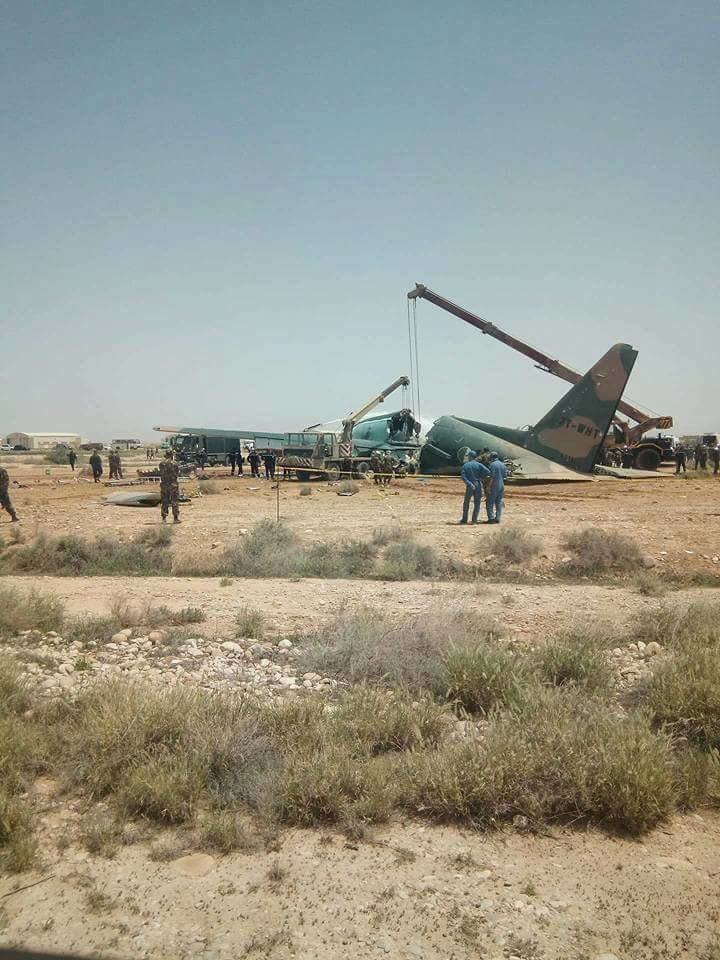
Algerian television channels say eight crew members have been injured after a military aircraft overshot the runway upon landing at Biskra Airport.
Private news channels Ennahar and Dzair News are showing images of the plane, a C-130 Hercules military transport aircraft, cut in half near the airport, which is 450 kilometers (280 miles) south of Algiers, the capital.
No other details have been disclosed about Sunday's accident.
In April, an Algerian military transport plane crashed just after takeoff in Boufarik, south of Algiers, killing 257 people in the North African nation's worst-ever aviation disaster.
Aviation Safety Network reports one fatality.
http://aviation-safety.net/database/record.php?id=20180603-0
-
It's the site. We had a database failure and I'm in the process of restoring things now.
--Casey
-
Special Operations Command has sped up deliveries of the AC-130J gunship as the Whisky model begins to be retired, a command official said May 23.
The command’s newest gunship, also known as the Ghostrider, recently reached initial operating capability and is “off and running,” Lt. Col. Jeffrey LaFleur, SOCOM materiel lead for integrated strike programs, said at the National Defense Industrial Association’s annual Special Operations Forces Industry Conference in Tampa, Florida.Special Operations Command has sped up deliveries of the AC-130J gunship as the Whisky model begins to be retired, a command official said May 23.
The command’s newest gunship, also known as the Ghostrider, recently reached initial operating capability and is “off and running,” Lt. Col. Jeffrey LaFleur, SOCOM materiel lead for integrated strike programs, said at the National Defense Industrial Association’s annual Special Operations Forces Industry Conference in Tampa, Florida.
SOCOM’s Program Executive Office-Fixed Wing has accelerated production of Lockheed Martin’s AC-130J to five airplanes per year, pending funding approval from Congress, he said during a PEO session, adding, “We are putting pressure on the whole system to get this airplane out the door faster.” The Ghostrider is a highly modified version of the C-130J aircraft, and is planned to replace the command's aging fleet of AC-130U/W aircraft, according to the Air Force.
The office has saved $287 million on the program by accelerating the timeline to finish deliveries in two years, LaFleur noted. Deliveries are currently expected to end in fiscal year 2023. The command plans to procure at least 37 AC-130Js and 12 have been delivered to the fleet to date, he told reporters after the session.
“Faster doesn’t mean more expensive all the time,” he said.
LaFleur added that PEO Fixed Wing has made a concerted effort to speed up procurement for its strike programs, including the Ghostrider.
“Our simple idea is pull the whole thing left. … How do I do it six months early? How do I do it a year early? How do I do it faster?” he said.
As deliveries continue, Special Operations Command is looking for improved capabilities to add to the AC-130J that will help keep it survivable downrange, he noted.
“It’s a slightly faster C-130, but it’s still a big, slow C-130. And it’s still facing threats that are very challenging for us,” he said. “We need to keep this airplane survivable in the [infrared/radio frequency] spectrum, and we need to be able to navigate without GPS and without some of the things we’ve gotten very used to.”
Meanwhile, the command must also keep the Whisky variant survivable even as it begins to be phased out of the fleet, LaFleur noted.
The AC-130W is considered “the workhorse of gunships downrange,” he added.
“It is doing great work, it has been for almost 10 years now. It’s paved the way for a lot of what we’re doing on AC-130J,” he said. “But … as of this year, AC-130W is in sunset, so the window of the Whisky is closing.”
The command still needs to maintain certain capabilities on the aircraft for the remainder of its time in the fleet, he noted. “We have a very small window to operate in this airplane and keep it flying and keep it relevant.”
PEO-Fixed Wing is looking for industry for help to quickly upgrade the missile warning system on the AC-130Ws to identify and defeat threats in the field, and to keep the aircraft survivable against GPS jamming and infrared threats, he said.
“We need this airplane to be able to navigate without a GPS,” LaFleur noted. “I don’t just want one other source; I want several sources. And I want someone to build me smart software that integrates those sources.”
The Whisky variant needs navigational integration software that can combine information coming from sensors on the ground, in space and anywhere else they may be located, he added.
-
Military satellite communications (SATCOM) provider iDirect Government (iDirectGov) is set to unveil its tactical removable airborne satellite communications (TRASC) for C-130 military transport aircraft at the 2018 Special Operations Forces Industry Conference.
TRASC integrates commercial off-the-shelf (COTS) components into an airborne terminal to provide troops with advanced and modern SATCOM technology. The components are integrated, tested and airworthy-certified.
Military satellite communications (SATCOM) provider iDirect Government (iDirectGov) is set to unveil its tactical removable airborne satellite communications (TRASC) for C-130 military transport aircraft at the 2018 Special Operations Forces Industry Conference.
TRASC integrates commercial off-the-shelf (COTS) components into an airborne terminal to provide troops with advanced and modern SATCOM technology. The components are integrated, tested and airworthy-certified.
The iDirectGov solution features multi-band 18in parabolic Ku / Ka dual-band antenna provided by UltiSat.
The antenna features a lightweight robust carbon fibre composite frame and high data rates.
TRASC also includes SelectTech’s roll-on roll-off transit case integrated with the iDirectGov 9800 AR Satellite Router, power supply and gateway router, and R4’s C-130 hatch or wing shoulder panel.
The R4 solution is based on a US Air Force and Federal Aviation Administration (FAA)-approved design for a multi-purpose hatch system.
iDirectGov president John Ratigan said: “iDirectGov is excited to partner with leading companies on TRASC, which provides the airforce with a product that meets all the specified communications requirements for the military’s airborne needs, including TRANSEC and military operating standards.
“When the military needs communications technology to perform a particular mission, it becomes a costly and time-consuming endeavour to start from scratch and build a solution.
“This partnership enables the Department of Defense to leverage the best COTS technology in the marketplace in order to speed up time to market and reduce development costs, all while meeting mission specifications.”
The parabolic antenna is said to be the only dual-band antenna that enables TRASC to support both military and commercial Ka frequencies.
To support voice and data for C-130 airborne applications, TRASC works with a number of Ka, Ku, X-band or a combination of these.
Being a fully FAA-compliant solution, TRASC is compatible with all variants of the C-130 military aircraft and can work with existing iDirectGov hub-based SATCOM networks.
-
Air Force Reserve Citizen Airmen and several C-130J Super Hercules aircraft from the 403rd Wing have returned from a deployment to Southwest Asia in support of Operations Freedom Sentinel and Inherent Resolve.
Aircrew from the 815th Airlift Squadron, maintainers from the 803rd Aircraft Maintenance Squadron and support personnel from the 403rd Wing were assigned to the 379th Air Expeditionary Wing, Al Udeid Air Base, Qatar.
The 815th AS, better known as the Flying Jennies, provided combat airdrop and airlift and aeromedical evacuation support to operations throughout the U.S. Central Command's area of responsibility.Air Force Reserve Citizen Airmen and several C-130J Super Hercules aircraft from the 403rd Wing have returned from a deployment to Southwest Asia in support of Operations Freedom Sentinel and Inherent Resolve.
Aircrew from the 815th Airlift Squadron, maintainers from the 803rd Aircraft Maintenance Squadron and support personnel from the 403rd Wing were assigned to the 379th Air Expeditionary Wing, Al Udeid Air Base, Qatar.
The 815th AS, better known as the Flying Jennies, provided combat airdrop and airlift and aeromedical evacuation support to operations throughout the U.S. Central Command's area of responsibility.
"In all the deployments I've been on with the 815th, we went more places in the area of responsibility than we ever have before," said Lt. Col. Keith Gibson, who commanded the 746th Air Expeditionary Squadron there. "It was good for our young Airmen to see such a variety of airfields and different tactical situations. They did an outstanding job."
The 746th AES made Air Force history during the event when they did a two-ship formation airdrop with the 774th EAS, an active duty squadron at Bagram Air Field, Afghanistan, providing supplies to a Resolute Support Expeditionary Advisory Package in Afghanistan earlier this month.
This was the first time two separate units in two countries came together for a single combat airdrop mission, said Gibson.
He added that the squadron delivered about 35 percent more cargo and passengers based on the C-130 historical averages at AUAB than what's typically done in a deployment, providing 7 million pounds of cargo to the warfighter, said Gibson.
The return from this deployment was vastly different from when the Flying Jennies returned from their deployment in 2014. The unit was scheduled to close at the end of that year. However, the Secretary of the Air Force reversed that recommendation in 2015.
"From the time we got the news that the 815th was staying open to declaring fully operational capable in November of 2017 was only 18 months," said Gibson. "Rebuilding the 815th in such a short time was a Herculean effort by the entire squadron, and is simply amazing. These guys have absolutely rocked it and done a terrific job. We have shown that the 815th is back in business."
This deployment was the first for the 803rd Aircraft Maintenance Squadron, which was activated in October 2016 to support the 815th AS.
"It was a huge learning opportunity," said Maj. Brian Horton, 803rd AMXS commander and the deployed officer in charge of the 746th Expeditionary Aircraft Maintenance Unit. "We certainly learned what our shortfalls were, honed our skills, and improved our process. Now we are going to bring what we learned here and get ready for the next deployment, which will be here in the blink of an eye."
Until then, deployers such as Horton are taking some time to spend with their families.
"I'm glad to be home," he said.
-
Perfect!!
-
23 hours ago, DC10FE said:
I think he's an ostrich.
I would agree. We just need to keep in mind that we are speculating, trust that the investigation will determine the cause and most importantly, be respectful/mindful of those involved and their loved ones.
-
Witness captures military cargo plane taking off from Savannah airport before crash.
http://www.charlotteobserver.com/news/local/article210618849.html
-
The Air Force says an Air National Guard C-130 cargo plane has crashed near an airport in Savannah, Georgia.
Chatham County Deputy Coroner Tiffany Williams says police tell her two people have been killed in the crash of a military cargo plane near an airport in Savannah, Georgia.
Williams said she didn't have any other details on the deaths Wednesday.
In a tweet, the Chatham County Emergency Management Agency says the plane crashed Wednesday at the intersection of two roads.
The Savannah Morning News reports the plane was from the Air National Guard 165th Airlift Wing. It crashed around 11:30 a.m.
A photo tweeted by the Savannah Professional Firefighters Association shows the tail end of a plane and a field of flames and black smoke along the side of a road as an ambulance stands nearby.http://abc30.com/c-130-military-cargo-plane-crashes-near-airport-in-georgia/3419348/
-
156 AW, 198 AS, WC-130H 65-0968 c/n 4110.
Coulson C130 Waterbomber Down in Australia
in 2020
Posted
The New South Wales Rural Fire Service confirms three people have died after a C-130 heavy air tanker owned by Coulson Aviation crashed in Australia this afternoon.
The aircraft was deployed to fires in the Snowy Mountains. They lost contact with the machine and the flight tracker stopped. “There’s no indication at this time what caused the accident,” NSW RFS commission Shane Fitzsimmons said in a press conference tonight.
There were approximately four other aircraft in the area fighting the fire at the time.
The weather has been hot, dry and windy with smoke and dust in the area. “It was another very difficult, aggressive fire day.”
“We are deeply saddened to confirm there were three fatalities,” Coulson Aviation confirmed in a post on its Coulson Aviation – Next Gen Firefighting Facebook page.
The aircraft had departed Richmond, NSW with a load of retardant and was on a firebombing mission. “The accident response team has been activated as well as local emergency services. Coulson Aviation will be sending a team to the site to assist in emergency operations.
“Our thoughts and prayers are with the families of the three crew members onboard,” said the statement, signed “The Coulson Family.
The NSW RFS reported on Twitter at 7:22 p.m. PST that it was investigating reports of a “serious incident” involving an aircraft in southern New South Wales.
The NSW RFS media release states that contact was lost with a large air tanker working in the Snowy Monaro area. The wreckage has been located. There was a fireball associated with the crash, according to the NSW RFS spokesperson.
“First and foremost, our thoughts and prayers are with the family of the three crew…and with Coulson Aviation, with whom we’ve had a long association.”
New South Wales Premier Gladys Berejiklian said in a news conference that the crash “demonstrates the dangerous work being undertaken and demonstrates the conditions that our firefighters are working under. There were in excess of 70 aircraft being used today (Jan. 23 in Australia) alone.
“Today is a stark and horrible reminder of the dangerous conditions that our volunteers and emergency services personnel across a number of agencies undertake on a daily basis.”
Berejiklian said there were 1,700 volunteers and personnel working to control fires a number of fires across New South Wales on the day the plane crashed.
Coulson grounded their large air tankers this afternoon in NSW and Victoria pending a review and out of respect to the families of the crew members, a NSW spokesperson said. No names are being released pending notification of next of kin. All three crew members were U.S. residents, Fitzsimmons said.
Coulson Aviation representatives will be in Sydney, NSW within the next 24 hours.
Coulson and the NSW RFS have worked together for the past four or five years and last year purchased a converted 737 air tanker from the Port Alberni-based aviation company. Coulson is contracted to operate and maintain that 737 for the Rural Fire Service, and also has a second 737 and second C-130 operating in the state of Victoria, Fitzsimmons said.
View full record